
2026 Linux IPsec workshop, Vienna (16 - 17 July)
The 2026 Linux IPsec workshop was held in Vienna from July 16th to 17th.
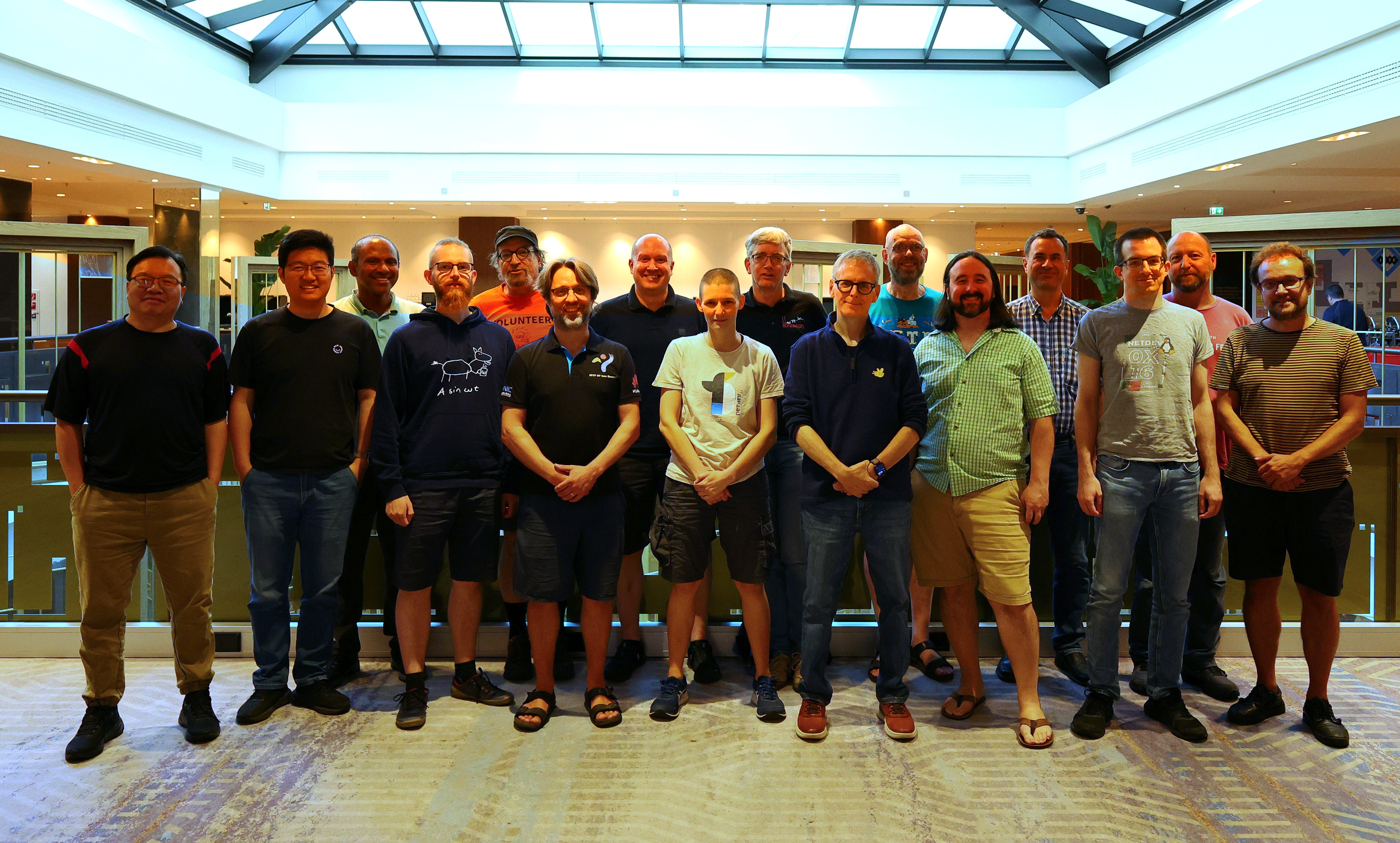
Presentation Notes and Slides
VPN Measurements on two host systems by Hannes Tschofenig and Paul Wouters
Hannes and Paul have been testing VPN performance with IPsec and Wireguard on a two host system. The hosts were equipped with Connectix 7 NICs.
VPN Performance Experiment by Simo Soini
For his Master's thesis Simo has been experimenting with traffic forwarded via VPN using IPsec, IP-TFS, Wireguard and OpenVPN. Some of the interesting findings included IP-TFS performance being noticeably behind that of regular IPsec, Generic Receive Offload (GRO) having huge effect on IPsec performance, and IPsec performance being inconsistent when using two-way traffic.
IPsec SA Migration in the Linux Kernel by Tobias Brunner
Tobias presented the issues with XFRM_MSG_MIGRATE, namely not being able to update the IP addresses of IPsec SAs. Starting from Linux kernel version 7.2 strongSwan is using the new XFRM_MSG_MIGRATE_STATE which allows more flexible migrations.
XFRM Migrate Mark Blues by Anthony Anthony
PMTU detection during SA establishment and during MOBIKE by Nathan Harold
Nathan presented some problems encountered when using IPsec in
The Libreswan Project Road Map by Tuomo Soini and Paul Wouters
Libreswan has had a slow year when it comes to the number of releases. Paul and Tuomo went through the main contents of those releases, explaining AI security audit findings, fixed CVEs and new features added. They talked about features currently being worked on, including three Google Summer of Code projects.
Paul also brought up his colleague's experimental project rewriting Libreswan in Rust using AI. Though the project is not serious the initial test results were better than expected, as PSK interoperability tests with Libreswan were successful.
Deprecations in the Linux IPsec subsystem by Sabrina Dubroca
Sabrina presented a list of items in the Linux IPsec subsystem to discuss their deprecation. A few of the items were deemed ready to deprecate, while others need more research about wether or not they are still being used.
ESP-Ping Implementation by Anthony Anthony
Anthony talked about his Linux kernel prototype implementation of ESP ping.
IKEv2 Group assisted Key Establishment by Steffen Klassert
Group assisted key establishment was discussed last year in Madrid. Steffen presented his and Anthony's work on an initial draft. There was a long discussion about the use case, security guarantees and overlap with existing protocols. There was no clear consensus reached, and more discussion is needed.
Using MLS with G-IKEv2 by Valery Smyslov
Valery presented a recent draft about extending G-IKEv2 with the MLS protocol.
Multi-Authentication in IKEv2 with Post-quantum Security by Guilin Wang
Optimized rekeys and the next by William Panwei
William brought the status of draft-ietf-ipsecme-ikev2-sa-ts-payloads-opt up for discussion. It was deemed that along with draft-ietf-ipsecme-child-pfs-info it is ready and should be pushed forward in the ipsecme working group session.
KEM-based authentication in IKEv2 by Valery Smyslov
Documentation/networking/xfrm*.rst by Michael Richardson
Improving the documentation of XFRM has been long overdue. Michael offers a proposal about how to reorganize the file structure and go through existing documentation which has parts that are outdated and / or unhelpful.
The netlink UAPI by Sabrina Dubroca
Netfilter's flowtable updates by Pablo Neira Ayuso
Using IKEv2 for Key Management for PSP by Valery Smyslov
As it is IKEv2 can't be used to handle key management for the PSP Security Protocol by Google. Valery explained how IKEv2 could be expanded to work with PSP, described in draft-smyslov-ipsecme-ikev2-psp.
Diet-ESP for 5G Fronthaul by Daniel Migault
Daniel presented his work on running diet-ESP for 5G fronthaul, which has very strict latency requirements and a need for a specific number of packets per second.